Can someone legally park on my driveway?
No. Nobody has a right to park on your driveway without your permission. Doing so is trespass. But trespass to land is, in most cases, a civil matter rather than a crime, so the police will not normally come and move the car. The police national legal database puts it plainly: police can only assist in limited circumstances, and if a trespasser refuses to leave, the landowner needs to consider civil action.1
That leaves many homeowners stuck: the law is on your side, but the quick remedies people reach for, like clamping the car or blocking it in, are themselves unlawful. This guide explains what you can and cannot do in England, Wales and Scotland. It is general information, not legal advice.
When will the police get involved?
Police involvement depends on what else is happening. Damage to your property, or threatening, abusive or insulting behaviour towards you, may be a criminal offence and should be reported on 101.1 A car simply left on the drive usually is not.
A car blocking your driveway from the road is a different problem, because it is on the highway rather than your land. Most councils now run civil parking enforcement, and where they do you should report a car obstructing your dropped kerb to the council. Where the council does not, you contact your local police force. Some forces will only attend if your own car is blocked in and you cannot get out.2
What does the law say about parking across a driveway?
In England and Wales, section 86 of the Traffic Management Act 2004 bans parking on the carriageway next to a kerb that has been lowered for vehicles, pedestrians or cyclists, in areas with civil parking enforcement. There is an exception where the car is parked outside a home by, or with the consent of, the occupier, but that exception does not apply to a shared driveway.3
The Highway Code adds that drivers should not stop or park in front of an entrance to a property.4 That rule uses advisory wording, so breaking it is not an offence in itself, but the Code says it can be used in evidence in court proceedings to establish liability.4
Scotland is different. Its dropped footway parking ban, in force since 11 December 2023, covers kerbs lowered to help pedestrians or cyclists cross. It specifically does not apply where the kerb has been lowered for access to a driveway or garage.5
Can I clamp, tow or block in a car on my drive?
In England and Wales, no. Section 54 of the Protection of Freedoms Act 2012 makes it an offence to clamp a vehicle, or to move it or restrict its movement by any means, without lawful authority and intending to stop the person entitled to it from removing it. The maximum penalty is an unlimited fine in the Crown Court.6 Parking your own car behind the trespasser to trap them is exactly the kind of restriction the offence covers.
Two details matter. The government's explanatory notes say that someone who moves an obstructively parked vehicle a short distance to regain access to their property does not commit the offence, as long as they do not intend to stop the driver retrieving it.7 And the Act makes an exception for a fixed barrier that was already present when the vehicle was parked, even if it is only raised or lowered into place later.6 Moving someone else's car carries its own risks, though, including damage claims, so take advice first.
In Scotland, the 2012 Act offence does not apply, but clamping has been off the table for much longer. In 1992 the High Court of Justiciary found that private wheel clamping amounted to extortion and theft under Scots law, a ruling ministers later described to Parliament.8 Scotland's public access rights do not help a driver either: they do not cover being on land in a motorised vehicle, and they do not extend to the land around a house needed for privacy.9
How the rules compare
| Situation | England and Wales | Scotland |
|---|---|---|
| Car parked on your drive without permission | Trespass, normally a civil matter | No right to be there: access rights exclude motor vehicles and the land around a house |
| Clamping, towing or blocking it in | Offence under the Protection of Freedoms Act 2012 without lawful authority | Treated as extortion and theft since 1992 |
| Car parked across your dropped kerb | Council enforceable in civil parking enforcement areas (TMA 2004 s.86) | Driveway kerbs excluded from the 2023 dropped footway ban |
| Highway Code rule 243 | Advises against parking in front of an entrance to a property | Same advice applies |
What should I do if someone parks on my driveway?
- Talk first. Many cases are a delivery driver, a visitor to a neighbour, or someone who genuinely did not realise the space was private. A polite word or a note usually solves it.
- Keep a record. Photograph the car, the number plate and the time, particularly if it keeps happening.
- Trace the keeper if you need to. The DVLA will release registered keeper details if you have reasonable cause, and it lists tracing the keeper of a vehicle parked on private land as an example. Individuals use form V888.10
- Report abandoned cars. In England and Wales, a car that appears to have been dumped can be reported to the local council.11
- Take legal advice for repeat problems. The police legal database says the safest course with a persistent trespasser is a court order, which, if breached, can become a criminal matter.1
What you should not do is damage the car, let its tyres down, clamp it or block it in. Any of those can turn you from the wronged party into the one facing a claim or a prosecution.
How can I stop it happening again?
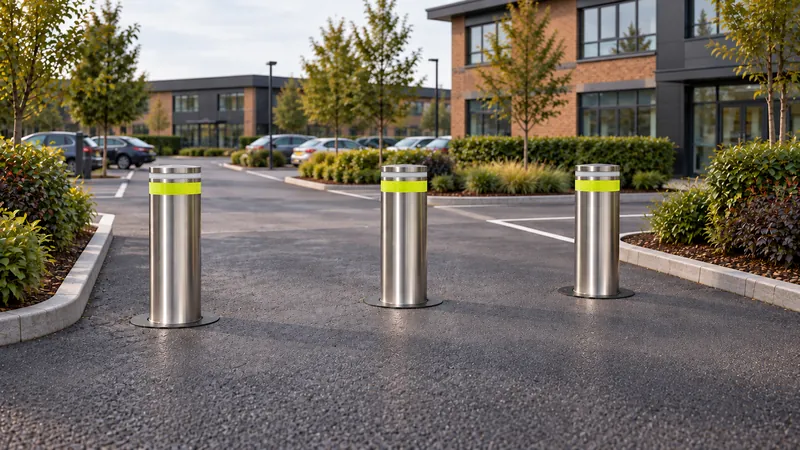
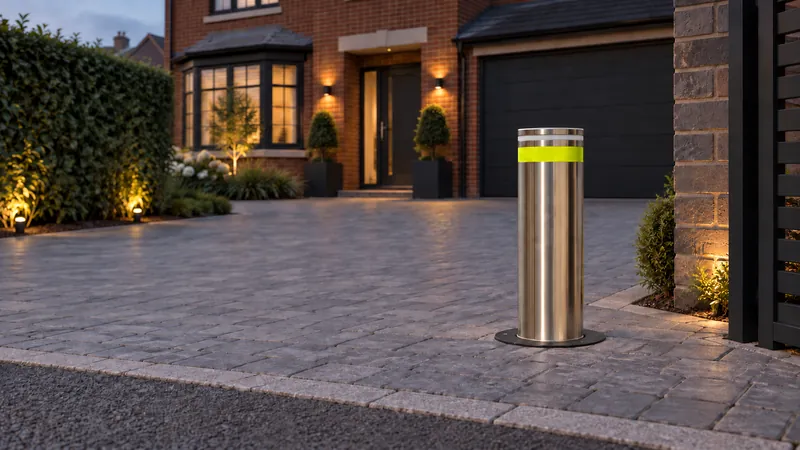
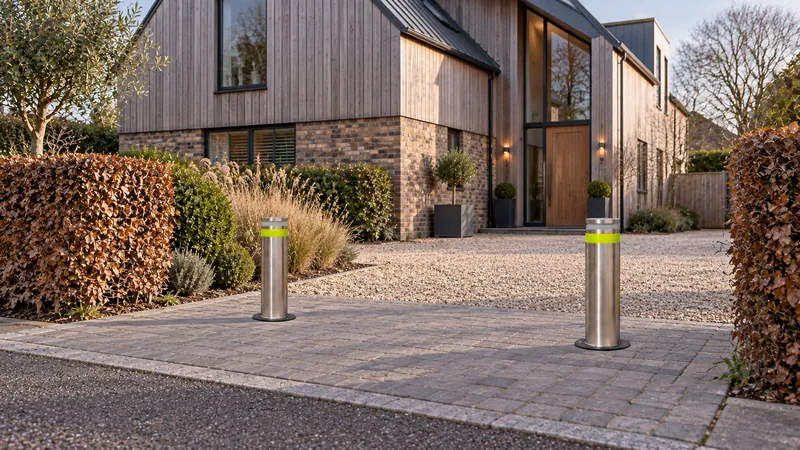
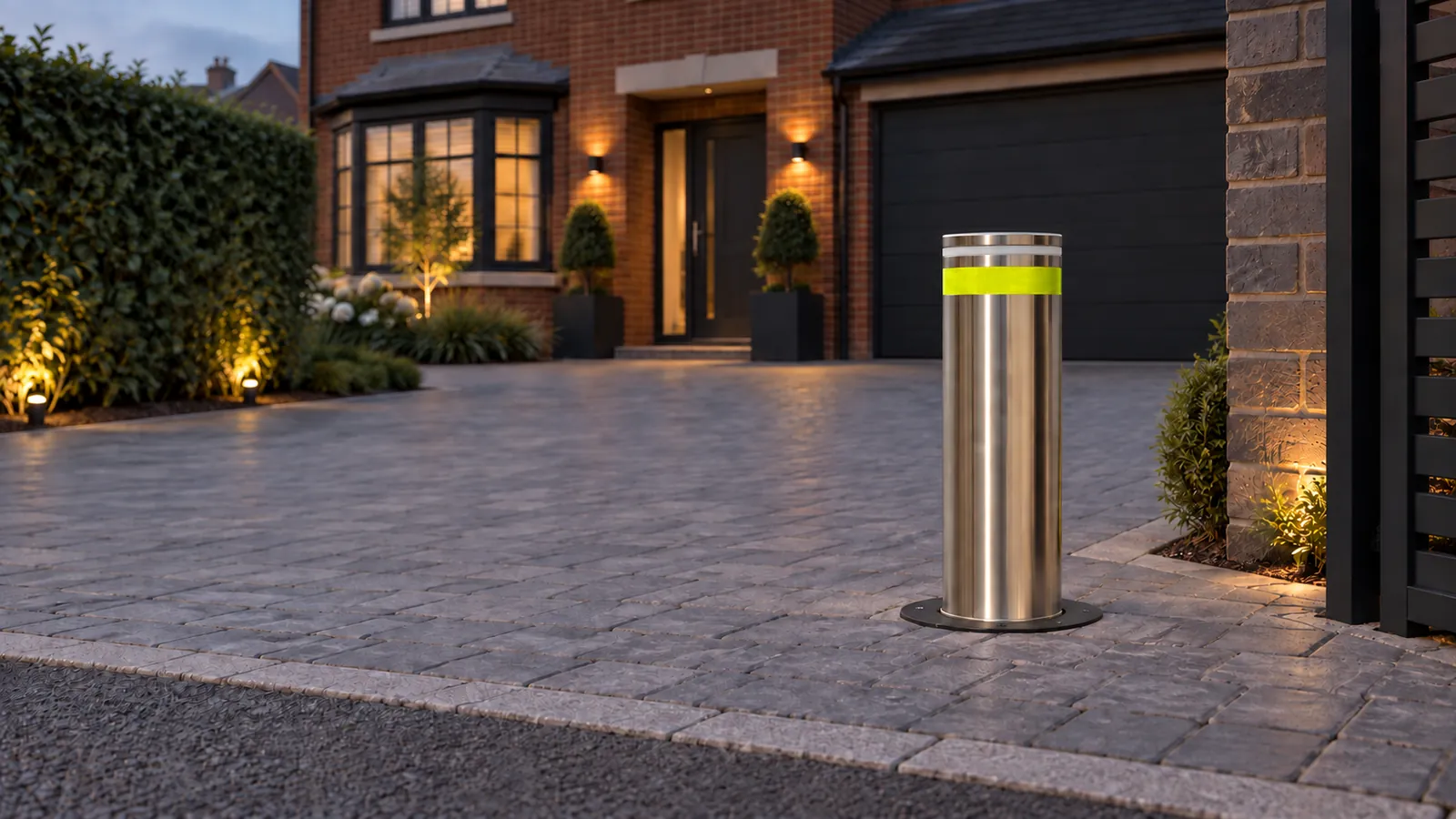
Because the legal remedies are slow, prevention is usually the better answer. Signs help with honest mistakes, but a sign on its own will not move a car. A gate, a locking post or a rising bollard at the entrance stops the problem before it starts. Some homeowners also use the same barrier to protect their own car overnight; our look at the latest car theft figures explains why the driveway matters. Browse driveway bollards or read the Boliq FAQ for more.
A note on bollards. Boliq bollards are access control bollards, not crash rated barriers. A raised Boliq Sentry, rising to 600 mm and £2,495 installed, stops a car being driven onto or off your driveway, but only while it is up. It rises and lowers from a key fob or the Boliq app, and a sensor in the top cap stops it rising if anything is on it. Never raise a bollard to trap a car that is already on your drive.