How big is the keyless theft problem?
Keyless entry lets you open and start a car without taking the key out of your pocket. The same convenience is what thieves exploit. In the Crime Survey for England and Wales, the thief manipulated the signal from the car's remote locking in 47% of thefts of a whole vehicle in the year to March 2025. When the survey first asked about it, in the year to March 2019, the figure was 13%.1
Over the same years, thefts where the offender used the car's real key or fob fell sharply, from 42% in 2014 to 2015 to 17%.1 Thieves no longer need to break into a house to take the keys. Tracker, which recovers stolen vehicles with the police, says 93% of the vehicles it recovered between January and October 2025 had been taken without their keys.2
How a relay attack works
A keyless car constantly listens for its key. When the key is close enough, the car unlocks and will start. A relay attack fools the car into thinking the key is close when it is actually inside the house.
- One person stands near the front of the house with a device that picks up the signal from the key fob, often from a hallway or kitchen just behind the front door.
- The device passes that signal to a second device held next to the car.
- The car reads the relayed signal as its own key, unlocks, and can be started and driven away.
There is no broken glass and often no alarm. Newer methods go further. Thatcham Research lists key emulators, signal jammers and devices that inject commands into the car's internal network (often called CAN bus attacks) alongside relay tools.6 Tracker warns that some devices are designed to block GPS tracking, so a stolen car cannot report where it is.2
Where and when keyless thefts happen
Because the thief needs to be near your key, most of these thefts happen at home. About 67% of thefts of whole vehicles in the Crime Survey happened at or around the owner's home, and 75% happened in the evening or overnight.1 Secured by Design notes that vehicles are most vulnerable overnight, particularly when parked on a driveway.5 For the full picture on where, when and how often cars are stolen, see our breakdown of the 2026 car theft figures.
What the Crime and Policing Act 2026 changes
The Crime and Policing Act 2026 received Royal Assent on 29 April 2026.4 It introduced two new offences covering the possession, importation, making, adapting, supplying or offering to supply of an electronic device for use in vehicle theft. The definition is deliberately broad, covering devices that manipulate the signal from remote locking, such as signal jammers and amplifiers, and future devices too. The maximum penalty is five years in prison, an unlimited fine, or both.3
The important change is that police no longer have to link a device to a completed theft. Someone caught with one has to show a legitimate reason for having it.6 That should make it easier to disrupt the organised gangs that Thatcham Research says are now behind vehicle theft. It does not stop the devices already in circulation, so protecting your own car still matters.
How to protect a keyless car
These steps come from Secured by Design, the official police security initiative, and from Tracker.52
- Keep the key in a signal blocking pouch or tin. Test it by trying the car door with the key inside. Pouches wear, so check them now and then.
- Keep keys away from the front door. A key hook in the hallway is the easiest place for a relay device to reach, and for letterbox fishing.
- Switch the fob off if you can. Some key fobs have a sleep or disable mode. Your handbook or dealer can tell you.
- Add physical security. A steering wheel lock or wheel clamp makes driving away slow and visible, and thieves tend to move on.
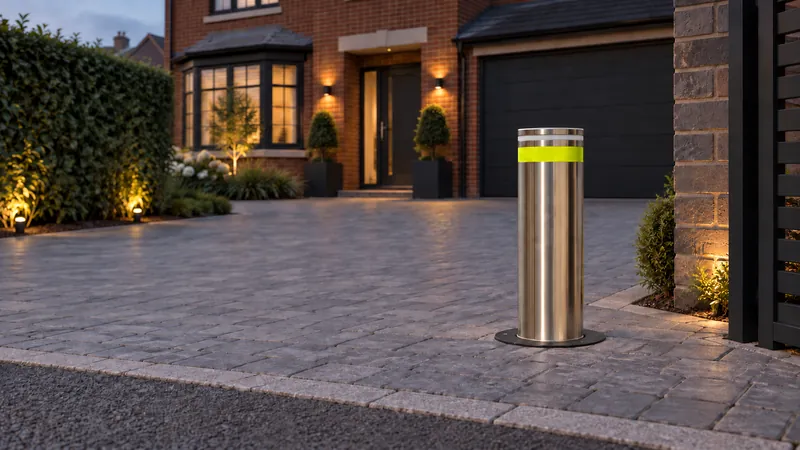
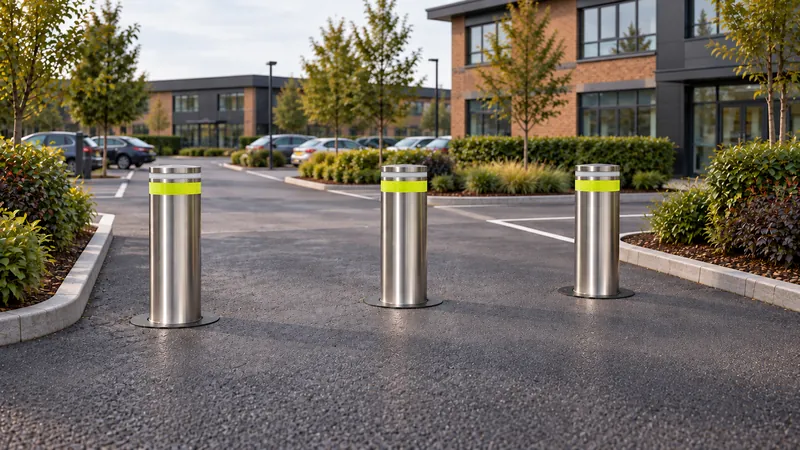
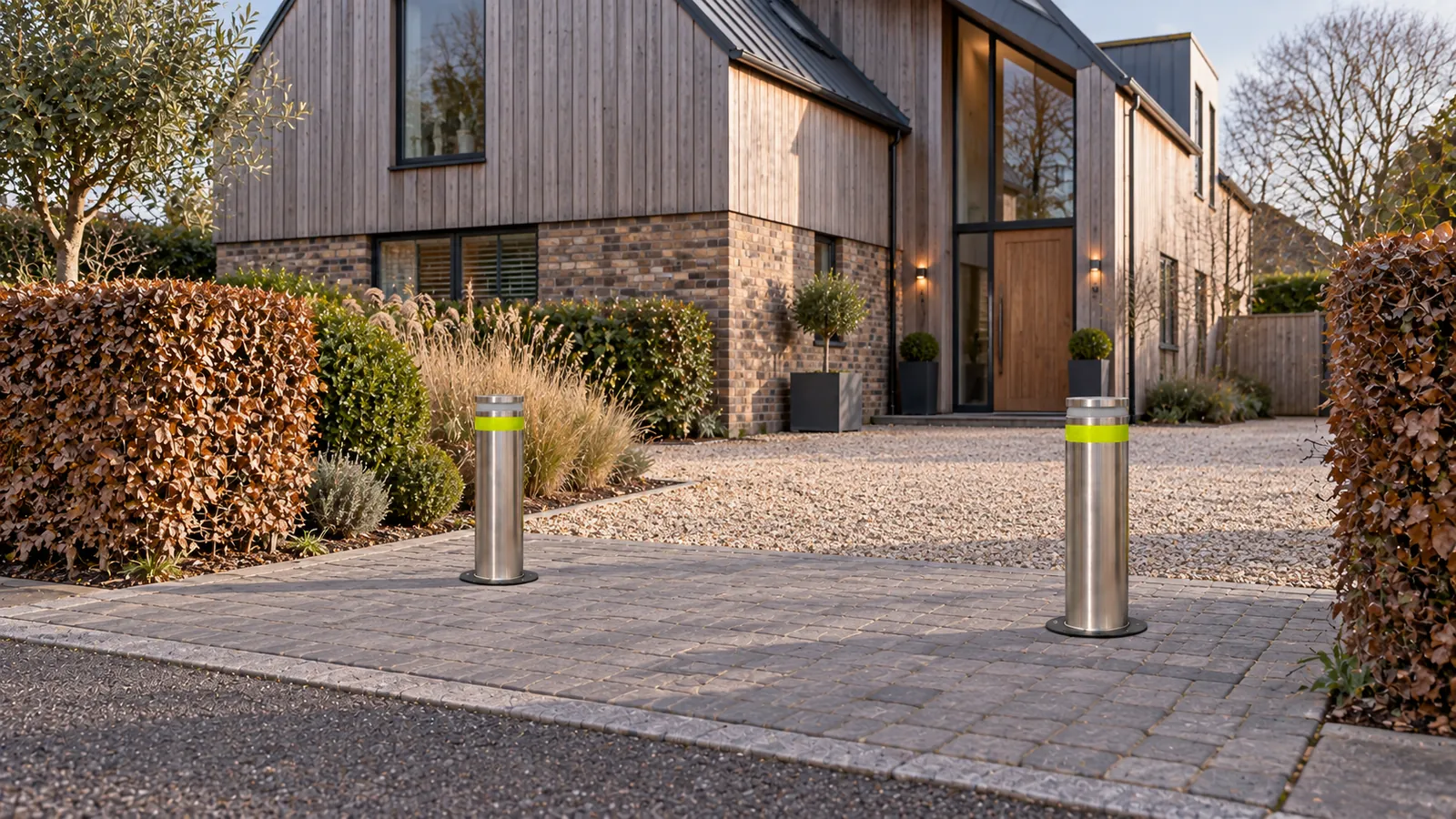
- Put a barrier in front of the car. Tracker recommends physical barriers such as security posts or gates. A raised bollard means that even a car opened electronically cannot be driven off the drive.
- Light and watch the driveway. Security lighting and a camera covering the drive make a quiet theft harder.
- Fit a tracker. It will not stop a theft, but it greatly improves the chance of getting the car back.
The electronic attack defeats the car's own security, so the most reliable protection is something the attack cannot switch off: a physical barrier between the car and the road.
A note on bollards. Boliq bollards are access control bollards, not crash rated barriers. They stop a car being driven off a driveway, and they only protect it while they are raised. Our Sentry bollard rises to 600 mm from a key fob, or on a nightly schedule with the Boliq app.