Which type of car park access control is right for your site?
There is no single best option, because each one answers a different question. A barrier arm checks each vehicle at a lane and suits a busy entrance. A gate closes the whole boundary, so it is the usual choice when a site must be locked out of hours. A rising bollard stops vehicles while leaving the space open to people on foot, and retracts into the ground when it is down. ANPR (automatic number plate recognition) is not a barrier at all: it is a camera system that identifies vehicles and can open any of the other three, or simply record who parked and for how long.
Most offices, retail sites and business parks end up with a mix, depending on peak traffic, who walks through the same space, and whether the car park must close at night.
How do barriers, bollards, gates and ANPR compare?
| Option | What it controls | People on foot | Typical use | Watch points |
|---|---|---|---|---|
| Barrier arm | One vehicle at a time in an entry or exit lane | Can walk around it, so the site stays open | Staff and visitor car parks with steady traffic | Queues if the credential is slow; the arm must not come down on a vehicle or person |
| Sliding or swing gate | The whole boundary | Closed to them too, unless there is a separate pedestrian gate | Depots, yards and sites locked at night | Slow to cycle; powered gates are machines with crushing risks |
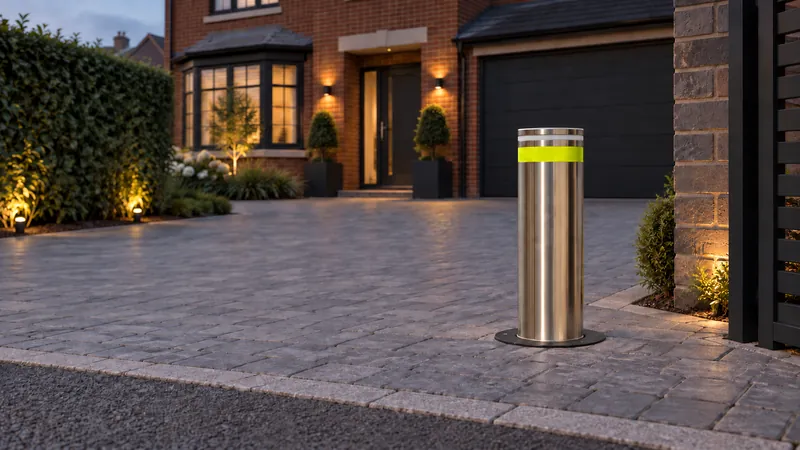
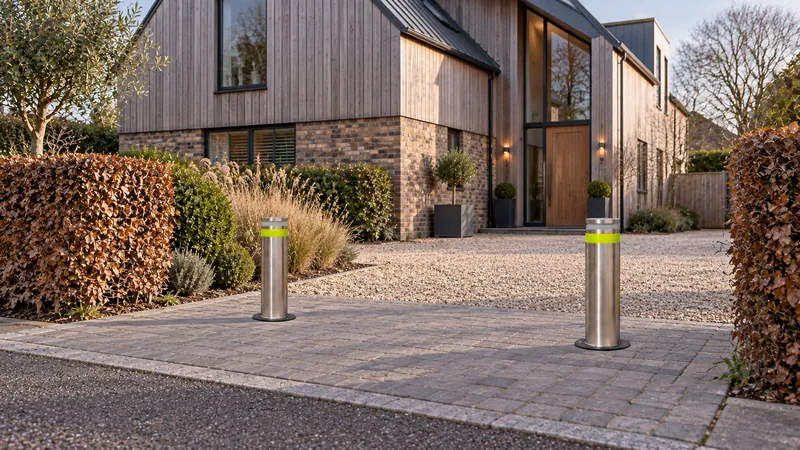
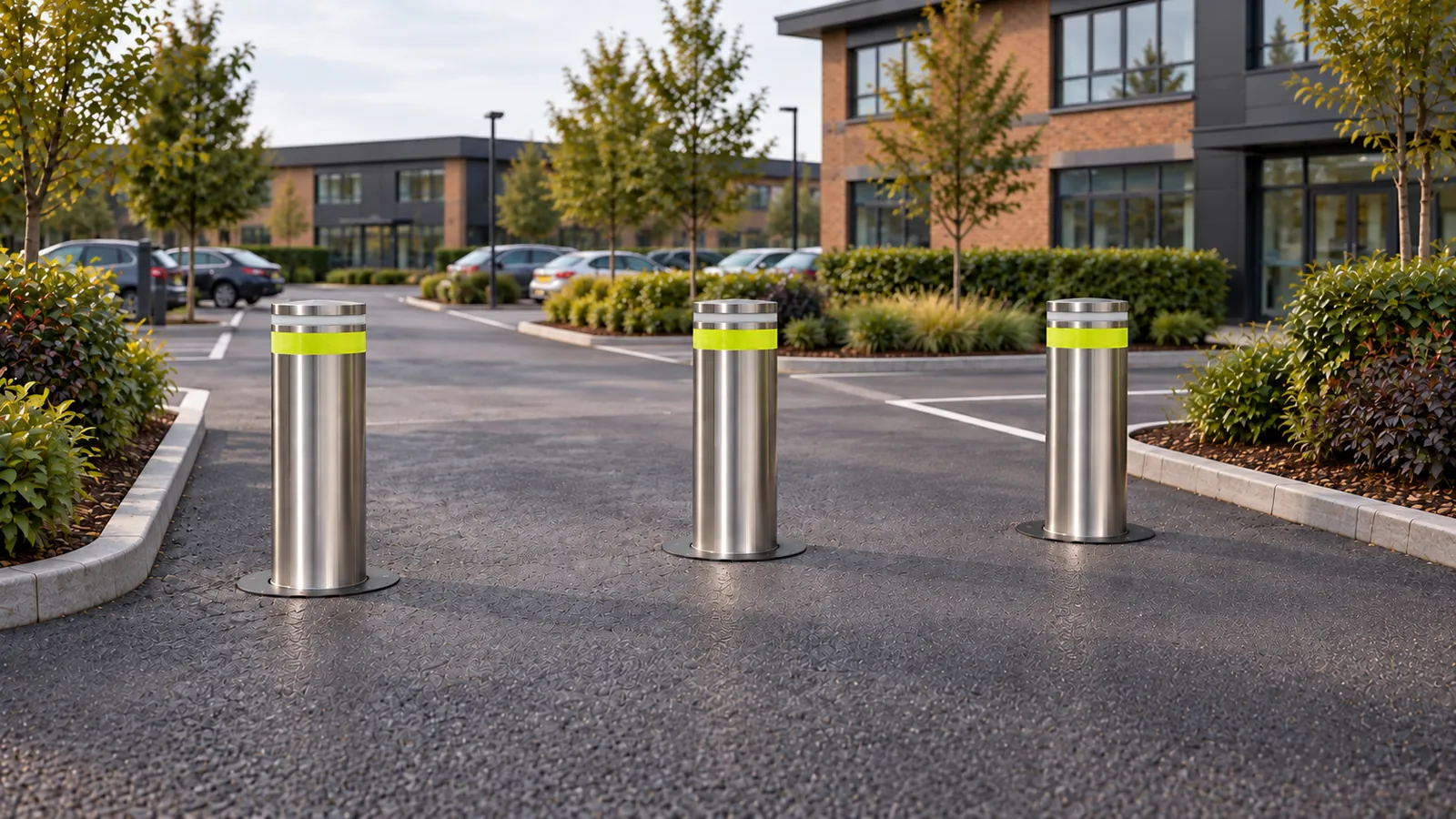
| Rising bollard | A vehicle lane, service road or area | Can pass between the bollards | Forecourts, shared spaces, reserved areas, out of hours closure | Must be well marked and sit in the vehicle route, not on a footway |
| ANPR camera | Identifies vehicles by number plate | No physical effect | Ticketless entry, permit parking, recording stays | Data protection duties and signage; needs a physical barrier to stop entry |
What does health and safety law expect in a car park?
A staff car park, service yard or private road on a business site is part of the workplace. HSE advises keeping parked vehicles out of the flow of traffic and people, and keeping people and vehicles apart in and around parking areas. It notes that physical precautions such as bollards and barriers can help stop vehicles crossing into walking areas.1
The legal starting point is regulation 17 of the Workplace (Health, Safety and Welfare) Regulations 1992, which applies in England, Wales and Scotland. Every workplace must be organised so that pedestrians and vehicles can circulate safely, and where they share a route there must be sufficient separation between them.2 HSE recommends barriers or guard rails at building entrances and exits, at the corners of buildings, and wherever people might otherwise walk straight onto a road.3
The access control equipment has to be safe too. HSE describes powered gates as machines that must be properly designed, installed and maintained to avoid serious and even fatal injuries, and says owners of commercial premises have duties for their construction and maintenance under the same 1992 Regulations.4 It issued safety notices after two children died in the summer of 2010, trapped in powered gates that did not detect them and closed with too much force.5 Secured by Design, the police security initiative, requires automated car park gates, shutters and grilles to have safety detection systems.6
How do you keep traffic moving at the entrance?
Queues at a controlled car park usually come from the time each driver spends at the entry point, not from the barrier itself. A few practical points help:
- Set the control point back from the road. A car waiting to enter should sit wholly on your land. Secured by Design expects gate installations to avoid obstructing the footway or highway while a driver waits.6
- Match the credential to the traffic. A driver with a fob, card or recognised number plate passes quickly. A visitor using an intercom takes longer, so separate staff and visitor lanes help at busy sites.
- Open up at peak times. Where most arrivals happen in a short window, it can make more sense to leave the entrance open during the working day and close it outside working hours on a schedule.
- Keep walkers out of the lane. HSE advises that, where possible, drivers leaving parked vehicles should not have to cross dangerous traffic routes.1
What do disabled drivers and visitors need?
The Department for Transport's Inclusive Mobility guidance sets out practical dimensions for controlled car parks:7
- Barrier control units for coin, card or ticket should be between 1,000 mm and 1,300 mm above the ground, with instructions at the lower end of that range.
- The maximum vehicle height should be shown on the approach, and a minimum clearance of 2,600 mm is recommended on the route to accessible bays.
- Details of any barriers or ticket machines should be published in advance, and drivers need a way to contact staff if they have difficulty with the equipment.
- Recommended accessible bays are 5% of capacity at new employment premises, and at least 6% plus one per disabled employee at shops, leisure sites and places open to the public.
The same guidance says bollards on pedestrian routes should be at least 1,000 mm tall with contrasting tops, and never linked by chains or ropes.7 Low rising bollards therefore belong in the vehicle lane, clearly marked, rather than on a footway.
Where does ANPR fit, and what are the data rules?
ANPR is best thought of as a way to identify vehicles. It can open a barrier, gate or bollard for known number plates, or record arrivals for permit or time limited parking. It does not stop anyone driving in on its own.
The Information Commissioner's Office says a vehicle registration mark is personal data in most circumstances when it is collected to identify a driver or keeper. Before using ANPR you should complete a data protection impact assessment, keep the number of cameras to what you need, put up clear signs at the entrance saying ANPR is in use and who operates it, and set retention periods so data is deleted once it is no longer needed.8
Do you need planning permission?
In England, permitted development allows gates, fences, walls and other means of enclosure up to 1 metre high next to a highway used by vehicles, and up to 2 metres elsewhere, but not within the curtilage of a listed building.9 Wales has the same height limits under its own order.10 In Scotland, the 1 metre limit applies to anything within 20 metres of a road.11
Barrier arms, rising bollards and camera poles do not all fit neatly into the idea of a means of enclosure, and local rules such as planning conditions can also apply. Ask the local planning authority before you commit. This is general information, not legal advice.
How do you secure a car park out of hours?
Secured by Design treats the main site entrance as the first line of defence and says other entrances should be kept to a minimum, with all of them controlled. Service and delivery roads can be blocked by retractable bollards or gates as long as the Fire and Rescue Service has a key, and the fire service should be consulted at the design stage. In higher crime areas it suggests securing staff parking with suitable fencing and an automatic access controlled gate.6
For wider car park design, Secured by Design points owners to the police owned Safer Parking scheme, formerly Park Mark. About 4,500 parking facilities now hold the award.12 If you are weighing up vehicle crime risk as well, our guide to the latest car theft figures shows where and when vehicles are most often taken.
What will it cost to run?
Every powered option needs regular safety checks and maintenance by competent people, and HSE recommends keeping records of servicing and testing.4 ANPR also brings software, connectivity and data handling costs. When comparing quotes, ask for the full cost over several years, not just the installation price, and ask who responds when something fails.
For sites that need to close a lane or area without fencing the whole boundary, see our commercial bollards page, or read about how installation works.
A note on bollards. Boliq bollards are access control bollards, not crash rated barriers. They control which vehicles can use a lane or area, and only while they are raised. The Boliq Sentry (£2,495 installed, rising to 600 mm) and Sentry Max (£3,495 installed, rising to 600 mm) open from a key fob or the Boliq app, can run on a schedule, and can be integrated with intercoms and access control systems. A sensor in the top cap stops a bollard rising if anything is on it. Business sites get a free site review and a fixed written quote.